
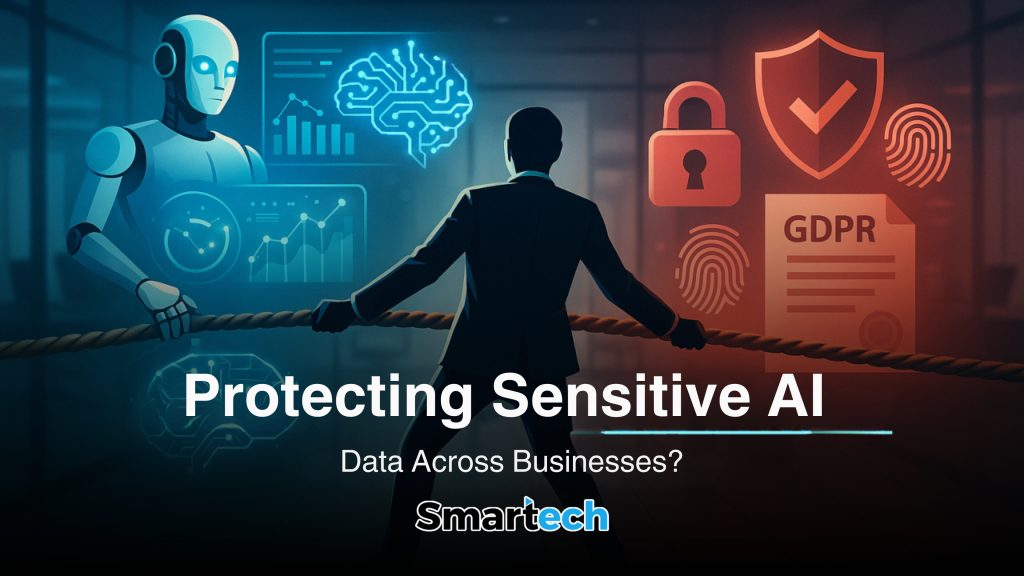
Artificial intelligence is now embedded in how Malaysian businesses operate — from customer analytics and predictive forecasting to automation, fraud detection, and decision intelligence. As AI adoption accelerates, so does the volume of sensitive data flowing through machine learning systems.
This is where many Malaysian companies face a growing challenge: how to protect AI-driven data without slowing innovation.
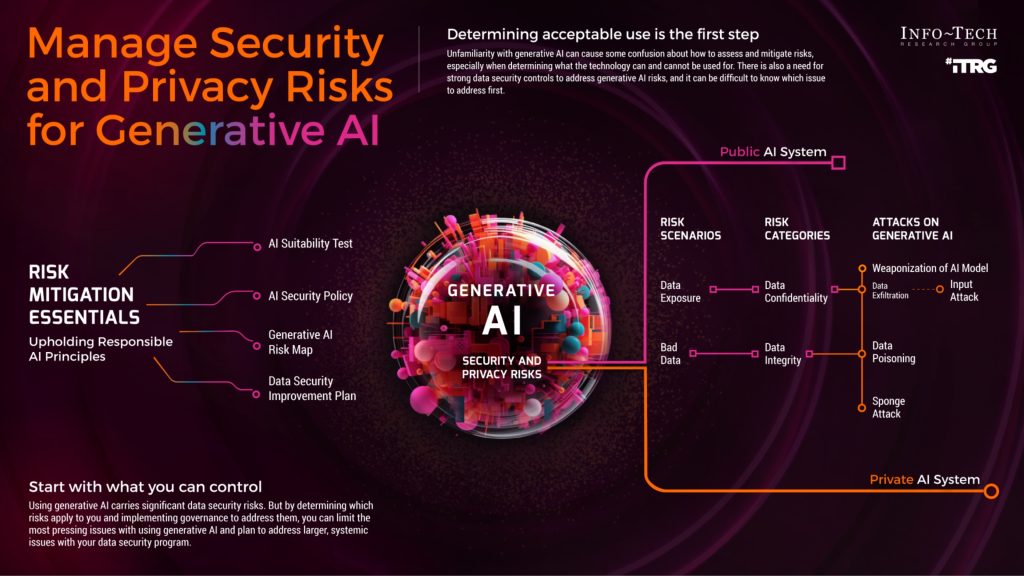
AI systems rely on massive datasets — customer records, financial data, behavioural insights, proprietary business information. Without proper safeguards, these datasets become high-value targets for breaches, misuse, and regulatory violations. That’s why AI data privacy for businesses is no longer just a technical concern — it’s a strategic business priority.
This article explores how Malaysian companies can protect sensitive AI data while continuing to innovate, remain compliant, and operate with confidence.
Why AI Data Privacy Matters for Malaysian Businesses
AI changes how data is collected, processed, and stored. Unlike traditional IT systems, AI models often ingest large datasets continuously and learn from patterns over time. This creates new privacy and governance risks that many organisations are not fully prepared for.
For Malaysian businesses, these risks are amplified by increasing regulatory expectations, customer trust concerns, and cross-border data flows.
When AI data privacy is handled poorly, organisations face:
Regulatory penalties
Loss of customer trust
Intellectual property exposure
Disrupted AI initiatives
Reputational damage that impacts long-term growth
Protecting AI data isn’t about slowing progress. It’s about enabling innovation with confidence.
Understanding What Makes AI Data Sensitive
AI systems don’t just store data — they transform it. This makes AI-driven information uniquely sensitive.
Sensitive AI data commonly includes:
Personal identifiable information (PII)
Financial and transactional data
Customer behaviour patterns
Employee records
Proprietary business intelligence
Training datasets that reflect real individuals or organisations
Even anonymised datasets can sometimes be reverse-engineered if governance controls are weak. This is why private data protection must be built into AI systems from the start, not added later.
Regulatory Expectations for AI and Data Protection in Malaysia
Malaysian companies must align AI initiatives with existing and emerging compliance obligations. While regulations continue to evolve, businesses are already expected to demonstrate responsible data handling practices.
Strong machine learning compliance means:
Knowing where AI data originates
Controlling how it is processed
Limiting access based on roles
Retaining data only when necessary
Securing both training and inference environments
Compliance is no longer just about IT — it affects governance, leadership accountability, and business strategy.
How Secure AI Data Practices Support Better Business Outcomes
Organisations that take AI data privacy seriously don’t just reduce risk — they unlock measurable advantages.
Secure AI environments enable:
Faster AI adoption without fear of breaches
Greater stakeholder and customer trust
Easier compliance audits
Confident scaling of AI initiatives
Stronger partnerships and vendor relationships
This is where AI security becomes a business enabler rather than a blocker.
Building Your AI Data Protection Blueprint
Protecting sensitive AI data requires a structured, organisation-wide approach. Malaysian businesses should treat AI governance as a core operational function.
A practical AI data protection blueprint includes:
1. Data Classification and Mapping
Understand what data feeds AI systems, where it comes from, and how it flows across platforms.
2. Access Control and Identity Management
Limit AI system access to only authorised users. Apply least-privilege principles across development, testing, and production environments.
3. Secure Training and Deployment Environments
Separate AI development environments from live production data. Use encrypted storage and secure processing pipelines.
4. Model Governance and Monitoring
Track model usage, updates, and outputs. Monitor for unusual behaviour or data leakage risks.
5. Compliance and Audit Readiness
Maintain documentation that demonstrates responsible AI data handling — essential for audits and regulatory reviews.
This blueprint ensures AI innovation happens within a controlled, compliant framework.
Tips for Businesses
Classify AI datasets based on sensitivity before deployment
Encrypt AI data both at rest and in transit
Apply strict access controls for AI development teams
Regularly audit machine learning workflows
Document AI decision-making and data usage
Align AI governance with broader IT and risk policies
These steps help Malaysian businesses reduce exposure while maintaining agility.
⚠️ Common Business Challenges & Solutions
Challenge 1: AI projects scale faster than data governance
SMARTECH Solution: Implement AI governance frameworks early so security and privacy scale alongside innovation.
Challenge 2: Sensitive data used in model training increases breach risk
SMARTECH Solution: Use segmented training environments and anonymisation techniques to reduce exposure.
Challenge 3: Limited visibility into AI data usage
SMARTECH Solution: Deploy monitoring and logging tools to track how AI models access and process data.
Challenge 4: Compliance uncertainty around AI regulations
SMARTECH Solution: Align AI initiatives with existing data protection standards while preparing for future regulatory changes.
Challenge 5: Scaling AI across departments creates inconsistent controls
SMARTECH Solution: Standardise AI security and privacy policies across the organisation.
Key Takeaways
AI data privacy is a business-wide responsibility
Secure AI systems enable faster innovation, not slower progress
Governance must scale with AI adoption
Compliance readiness builds long-term confidence
Strong AI security protects both data and reputation
Malaysian businesses benefit from proactive AI risk management
🔗 Internal Linking
This topic connects naturally with Smartech insights on cloud governance, AI-driven productivity, and business data protection strategies. Businesses exploring AI adoption should also review Smartech content on responsible cloud collaboration and digital transformation planning.
Related Blogs Section
🌐 10 Biggest Cybersecurity Mistakes of Small Companies
🌐 How to Minimize Ransomware Damage
🎯 Need Help?
AI innovation should never come at the cost of trust or compliance. With the right governance and security controls, Malaysian businesses can scale AI initiatives confidently and responsibly.
Smartech helps businesses design secure, compliant AI environments that support growth without unnecessary risk.